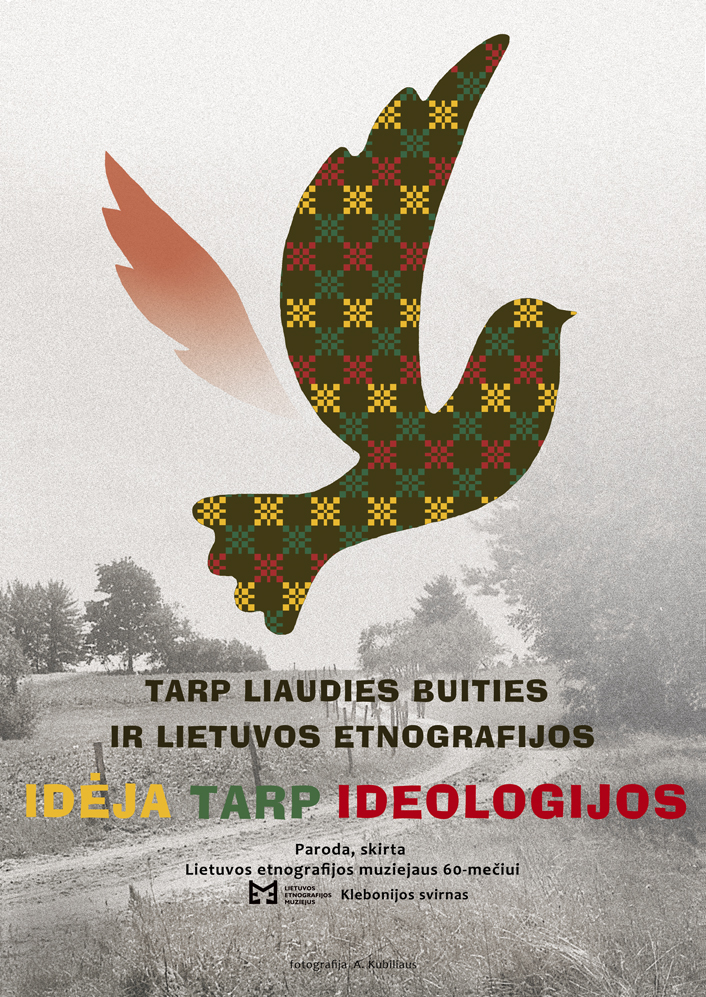
Dedicated to the sixtieth anniversary of the founding of the Open Air Museum of Lithuania.
The Open Air Museum of Lithuania began its existence on January 1, 1966. On this day, an order of the Minister of Culture announced the founding of this museum. In those days, the museum had no physical body – neither premises nor the land area where we are now. A creative process began that lasted for many years and continues to this day. However, in the time we are talking about, the Open Air Museum of Lithuania existed only in the ideas of its first employees and its council, who shaped its future image.
What were those ideas?
The Soviet era is an extremely controversial period. It is a time rich in ideology, full of universal fear, surveillance, lies, and silence. It is difficult for a contemporary historian to study it. Documentary evidence paints a completely different picture than the stories of contemporaries. Illegibly crossed out places in the text, missing pages are followed by significant omissions, and the real instructions were often never written down. Finding reality in a distorted image is a difficult task.
Just as truth hides among lies, completely different ideas can sometimes be hidden among communist ideology. A phenomenon of Soviet-era bureaucracy is institutional informalism. This is a process during which an institution, for various reasons, stopped functioning for the purpose for which it was created. Most often, it is a negative phenomenon. An institution intended to serve society, but in which people’s needs are not satisfied without bribes or acquaintances, functions only for its own sake. And what if an institution with a negative purpose deviates from its original purpose?
This museum was built by people with various experiences and the ideas conditioned by them. These ideas did not appear out of nowhere – some brought them from the still independent Lithuania, others successfully adopted them. In an environment surrounded by ideology, they were united by one idea – Lithuanian ethnography.
By setting up the museum, they created a reduced image of Lithuania’s past. The diverse Lithuania, as it was and is – occupied and free, fighting and adapting.
We invite you to enjoy this work, born sixty years ago, today.
Exhibition location: Rectory barn in museum’s town.
Exhibition curators
Justas Rimavičius, Ramūnas Bučas, Milda Šemeklytė
Exhibition designer
Daiva Zubrienė